You want the big-dog life — without dog fur in your morning coffee, on your couch, or on your work clothes. Fair. The good news: big dogs that don't shed (much) actually exist. The catch? 100% hypoallergenic is a myth — no dog is completely shed-free. But some come impressively close. Below, 6 genuinely low-shedding giants, rated honestly. If non shedding dogs in a large size sound too good to be true, keep reading.
Key Takeaways:
There is nothing called “100% hypoallergenic.” All dogs shed some amount of fur every day; in the same way that humans lose hair in varying degrees.
Standard Poodle is the OG hypoallergenic large breed. Their curly, low-shedding coat is what makes Doodles such a popular hybrid, too.
Giant Schnauzers need humans who are not only capable of handling their strong-willed personality but also their demanding grooming needs.
Airedale Terriers need to undergo hand stripping twice a year for coat maintenance.
Their coat sits somewhere between curly and wavy and just keeps growing. This means regular trims are non-negotiable.
Irish Water Spaniel’s resilient coat demands an immense amount of work. Skip brushing for a few days, and you’ll feel the matting on their coat.
Unlike most dog breeds that are happy with once-in-a-month baths, an Afghan Hound’s coat demands weekly baths and conditioning.
The number one training focus with a low-shedding dog must be to desensitize them towards grooming and get them absolutely comfortable with being handled - both by family and strangers.
What exactly does “non-shedding” mean?
“Non-shedding” is a marketing gimmick. All dogs shed some amount of fur every day; in the same way that humans lose hair in varying degrees. But it is the type of coat that differs.
Dogs with continuously growing hair (single-layered, similar in texture to human hair like Afghan Hound) lose their hair gradually and minimally, instead of the thick multi-layered dogs like Huskies; who shed hair in extreme seasonal dramatic dumps.
The word that is correct to use would be “low-shedding,” not “non-shedding.” This distinction is particularly important in the case of allergies, since the allergy trigger is dander, not the fur itself.
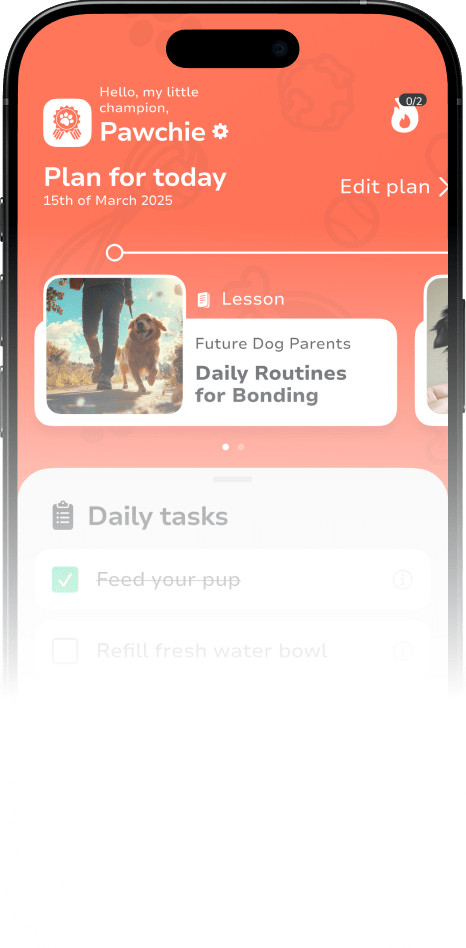
Want to know exactly what your dog needs based on their breed, coat type, and lifestyle? PawChamp builds a daily plan tailored specifically to your dog — so you're never guessing again.
6 Best Large Dog Breeds That Don't Shed
These 6 dogs make the cut for the top favorites in large dogs that don’t shed a lot. However, the time you save from constant cleaning of your couch and carpet may very well be spent grooming and managing these beauties!
1. Standard Poodle
Standard Poodle is the OG hypoallergenic large breed. The best part about their curly coat? It's the fact that it traps loose hair instead of releasing it everywhere.
Every doodle you see walking on the street today exists only because humans desired the Poodle's low-shedding coat combined with another breed's temperament. Bernadoodle, Ausidoodle, Goldendoodle... you name it! The Poodle is literally the foundation of the low-shed movement!
🙌 Fun fact
Did you know that the iconic Poodle cut with the signature pom-poms were originally designed by hunters? That cut helped in protecting the dog's joints and vital organs from cold water while keeping the rest of the coat trimmed for ease of movement. What started off as functional stayed for its fabulousness!
Grooming a Poodle and keeping that curly coat mat-free is a commitment. So, if grooming a Poodle is likely to aggravate your allergies, it's best to pick another breed with way less grooming requirements.
2. Giant Schnauzer
Packed with power, intelligence, and loyalty, the Giant Schnauzer is a slightly intimidating distant cousin of the Standard Poodle. They have a wiry, coarse outer layer and a soft undercoat.
Giant Schnauzers are in no way a beginner breed. They need humans who are not only capable of handling their strong-willed personality but also their demanding grooming needs. These dogs need to be brushed multiple times a week and trimmed every few weeks to prevent matting.
That face card, especially the eyebrows and beard, also needs attention to detail and extra TLC every now and then.
3. Airedale Terrier
The scruffy exterior of the Airedale Terrier is built for the outdoors and is all-weather resistant. Their wired coat totally complements their uber confident persona and grit.
If you plan on welcoming an Airedale Terrier home, you need to read up as much on their grooming needs as their training requirements. They need to undergo hand stripping twice a year to maintain their coat texture. If you can't visualize yourself manually plucking a dead topcoat from this wire-haired dog by hand or with a stripping knife, reconsider your choice.
4. Portuguese Water Dog
The Portuguese Water Dog got its mainstream fame as the Obama family’s “First Dogs.” The choice of the breed was largely driven by his daughter, Malia’s, allergies. Thanks to their single coat with no undercoat, living with this breed means your furniture and carpets remain relatively clean.
However, you don’t want to confuse low shedding with low effort. Their coat sits somewhere between curly and wavy and just keeps growing. I guess that’s why it’s called Wiry. Regular trims are non-negotiable for the PWD unless ‘uncomfortably matty’ is the theme you’re going for.
Their webbed feet also require extra TLC every time you take them for a swim or muddy hike. The extra skin between the toes can trap dirt, tiny rocks, grass, and mud.
💡Tip:
Make sure to clean these areas thoroughly and regularly to prevent irritation or infections.
5. Irish Water Spaniel
As a certified trainer who has worked with a plethora of breeds, I have rarely seen the Irish Water Spaniel be the first choice for large non-shedding breed enthusiasts. This is primarily because their grooming needs are categorized as classic high-maintenance with a "velcro" coat that traps dirt and debris wherever they go. They also have intense exercise requirements.
Those tight liver-colored curls, a topknot, and the oddly bare, rat-like tail is a look you don’t forget that easily. Their coat is highly water-repellent and is built for brutal Irish bog conditions. A coat that is resilient demands an immense amount of work too.
Skip brushing for a few days, and you’ll feel the matting on their coat. Use a metal comb to detangle. Pay close attention to behind the ears, under the armpits, and around the tail. Use a mat separator for tough tangles.
6. Afghan Hound
When nature decided to flex, it created the Afghan Hound.
That long, silky coat feels more divine than the most luscious of human locks. It flows, grows, and the best part — it doesn’t shed all over your house!
If this sounds perfect, hold your horses for just one more minute. This ancient hunting breed comes with a coat that demands serious time, energy and monetary investment.
Unlike most dog breeds that are happy with once-in-a-month baths, an Afghan Hound’s coat demands weekly baths and conditioning. Don’t make the mistake of thinking “low shedding equals easy.” Did you know that it is not recommended to brush a dry, dirty coat of this supermodel? The dry coat of an Afghan Hound not only tangles quickly, but also catches debris like a magnet. Always apply conditioner before brushing.
How to Manage Grooming for Low-Shedding Large Breeds?
When we think of "low shedding," it's easy to fall into the trap of believing that they are also low maintenance. In most cases, it's usually the opposite. This is because dogs that have no undercoat have fast-growing hairs that are quick to mat.
The number one training focus with a low-shedding dog must be to desensitize them towards grooming and get them absolutely comfortable with being handled — both by family and strangers.
Dematting, frequent brushing, and trimming can be overwhelming for dogs. However, if the dog has been habituated to the experience since puppyhood, it gets a lot easier.
To set yourself up for success, make sure you have the right tools and routine in place:
A slicker brush and steel comb for regular detangling and coat maintenance
A detangling spray and good conditioner to keep the coat manageable between sessions
Professional grooming every 6–8 weeks — unless you're a pro yourself, budget both the time and the cost accordingly
The sooner you build these habits, the smoother grooming sessions will be — for both you and your dog.
How Can Pawchamp Help?
Large, low-shedding breeds are often the most intelligent and strong-willed dogs on the planet. That combination needs the right guidance — not just good intentions. Here's what you get with PawChamp app:
A training plan built around your specific breed's needs, because a Giant Schnauzer and a Standard Poodle are simply not the same conversation.
Science-based, positive reinforcement methods designed for strong-willed, high-intelligence breeds that don't respond well to generic advice.
Cooperative care habits built from puppyhood — so grooming, handling, and vet visits become genuinely stress-free for your dog, not just manageable for you.
Ask a Dog Expert when you're unsure about your breed's specific grooming needs, behavior quirks, or where to even start with training.
Take a quick quiz today and get a personalized training plan built around your dog.
Bottom Line: Are Large Dogs That Don't Shed Worth It?
Low-shedding large breeds are genuinely impressive dogs — intelligent, loyal, and easier on your furniture than a Husky in spring. But "low shedding" never means low effort. Every breed on this list trades vacuum time for grooming time, and that's a deal you need to go in with eyes wide open. The right breed, the right tools, and the right training approach make all the difference — and that's exactly where most owners either thrive or struggle. Choose wisely, commit fully, and you'll have a dog that's worth every single brush stroke.