Bringing a puppy home soon? Everyone will have opinions — your neighbour, your coworker, your uncle. Here's what actually matters: a simple, trainer-approved checklist that cuts through the noise and tells you exactly what to buy, set up, and do before your puppy walks through the door.
Key takeaways:
A checklist keeps you focused on your puppy’s real needs and filters out conflicting “expert” advice
The true essentials to buy first: food setup, safe treats, leash/harness/ID, a few smart toys, and basic grooming supplies
How to puppy-proof your home and set up simple, consistent stations for feeding, rest, and containment (crate/pen/gates)
What to prioritize in the first days and nights: rest, bonding, and lots of potty breaks (training can wait a beat)
How to build an easy routine and add tiny, fun training sessions like sit, down, and come once your puppy settles in
Why Do You Need a Puppy Arrival Checklist?
You might wonder – aside from the leashes, collars, and bowls – what does a puppy need, and why do you need a puppy preparation guide?
The biggest reason I recommend a checklist for new puppy parents is because as soon as you tell your coworker, uncle, or neighbour that you’re welcoming a puppy home – everyone will have some advice or recommendations.
Take it if you want, but if you find yourself questioning the wisdom of someone who exclaims they have “raised dogs for 30 years”, just rely on your checklist.
💡 Think about it:
If you have covered your priorities and are meeting your dog’s needs – there is nothing more you need to buy or do!
What to Buy for a New Puppy?
While you might choose to add a few extras, these are the core basics I recommend to every puppy starter kit:
Food, Treats, and Feeding Setup
Start with the basics that will support your puppy growth, training, and healthy eating habits from day one.
High-quality puppy food (ask your vet or breeder for recommendations)
Safe treats for puppies (single-ingredient, low-calorie) like beef lung or liver
High value treats you can break into tiny pieces (freeze-dried cheese works well)
Treat pouch
Raised feeder station sized to your puppy (adjustable legs are a bonus)
Slow feeder bowl or insert for pups who gobble meals
What type of food are you planning to feed your puppy?
Raw
Wet food
Not sure yet
Good start. The next step is making sure the portions and schedule match your puppy's specific needs — breed and age change everything. PawChamp's feeding quiz does that in under 2 minutes.
Leash, Collar, ID Tags & Travel Essentials for Puppies
Keep your new puppy safe, secure, and ready for every walk, trip, and outdoor adventure with these must-have everyday essentials.
Standard 6-foot (2 m) puppy leash for daily walks and basic leash training
Long line, at least 20 feet (6 m) — ideal for recall training and off-leash practice
Flat collar with quick-release buckle for comfort and safety
ID tag, registration tag, and puppy microchip tag — critical if your dog gets lost
Properly fitted puppy harness with good shoulder room (snug fit, two fingers under straps)
Collapsible food and water bowls for travel and outdoor trips
Safe puppy car travel: approved crate or buckled-in travel harness
💡 I recommend:
Biothane or PVC-coated leashes are waterproof and easy to wipe clean after adventures.
Best Toys for Puppies
The right toys help with teething, mental stimulation, and preventing unwanted chewing around the house.
Puppy-safe chews — biting typically ramps up during teething, so have these ready.
Snuggle Puppy (heartbeat-style comfort toy) — makes a real difference for sleep and settling in.
Easy puzzle feeders — provide mental stimulation and can also slow down eating.
A few stuffed toys — thrifted ones work just as well; rotate a small selection to prevent boredom and keep them interested.
Rotating toys is one of the simplest ways to prevent your puppy from chewing on furniture — novelty is the key.
Dog Grooming & Hygiene Supplies for Home Care
Introducing grooming tools early makes future vet visits and grooming appointments much easier.
Brush and/or comb suited to your puppy (ask your groomer or pet store staff).
Puppy-safe shampoo.
Puppy-safe wipes for small messes.
Puppy toothpaste and toothbrush.
Poop bags.
Starting gentle grooming habits early helps your puppy feel comfortable with handling and builds positive lifelong routines.
Puppy Home Setup: Must-Haves Before Your Puppy Arrives
Now that you’ve got your supplies, let’s talk about puppy proofing house setups. To create a safe and practical environment, work through the following steps:
Walk through the rooms you use most and put away anything your puppy could chew.
Store toys in baskets, move remotes out of reach, and put glasses back in their case.
Close doors or use puppy gates to block off areas you don’t want your puppy in (like kids’ rooms).
If you have other pets, give them a quiet space where they can decompress.
Set up your puppy’s food and water station near a water source, usually in the kitchen.
Choose one consistent spot for food and treats so everyone can easily find them.
If you’re using a crate or puppy pen, pick a practical location now and keep it consistent.
Still not sure if your home is ready? One question to a dog expert takes less time than googling it.
First Day and First Night With Your Puppy
You might guess that, as a dog trainer, the first thing I would recommend when bringing a puppy home is training. But it’s not! I simply want you to enjoy the first few days and nights at home with your new puppy. These are important moments to begin forming a lasting bond with your whole family.
Let your puppy rest as often as they wish and interact with them when they’re awake. Celebrate the first successful potty moments. Figure out a mealtime routine and begin to learn about your puppy’s personality.
Oh yeah, and try to get some sleep yourself! PawChamp can guide you through predictable routines for your pup.
Puppy Training and Routine Basics
After the first few days have passed and you have begun to figure out a routine, now you can start to incorporate some very basic training. Some puppy training essentials are potty training, crate training, and body handling (to help with grooming and vet appointments).
You can spend a few minutes at a time practicing “sit”, “down” and “come”. Make it fun for everyone and turn training into little games. “Come” can actually be a simple game of hide and seek!
How PawChamp Helps With Your Puppy’s First Week at Home
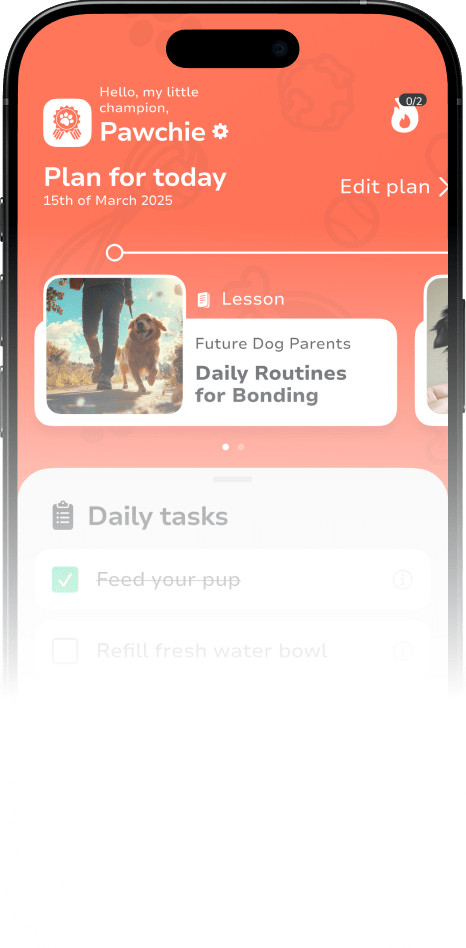
The first week with a puppy is basically a loop of potty breaks, naps, and “what are you chewing now?.” PawChamp helps you stay calm and consistent by turning the basics into a simple routine you can follow day by day.
Here’s what you get:
A clear structure for the first days, including potty timing, rest, and gentle settling routines
Practical puppy training basics once your puppy is ready, like crate comfort, handling, and simple cues
Quick, realistic steps that fit into busy days, so you’re not relying on random advice
Ask a dog expert chat access if you’re stuck on common problems like accidents, biting, whining, or crate struggles
Thousands of puppy parents used PawChamp to get through the first week without the chaos.
Bottom Line
Bringing a new puppy home is a big moment, and it’s normal to feel like there’s a million details to get right. The good news is that you don’t need to do everything at once. If you’ve covered the basics, set up a safe space, and have a simple routine, you’re already setting your puppy up for success. Focus on rest, potty breaks, and building trust in those first few days. Training can come in tiny, playful sessions as your puppy settles in. You’ve got this - one day at a time.